
Click HERE To Buy Clonidine Online ↓
 Clonidine Vs Guanfacine: Choosing the Right Alpha-2 Agonist — Mechanism, Indications, Side-effect Profiles Contrasted
Cellular Mechanisms: Clonidine Versus Guanfacine Explained
At the cellular level, clonidine and guanfacine both activate central alpha-2 adrenergic receptors to reduce noradrenergic firing, but their receptor subtype preferences and signaling consequences differ. Clonidine is less selective and engages alpha-2A, alpha-2B, and alpha-2C subtypes, producing broader inhibition of locus coeruleus output. Guanfacine preferentially targets alpha-2A receptors, strengthening prefrontal cortical regulation of attention and working memory.
A concise comparison highlights functional distinctions:
| Feature | Clonidine | Guanfacine |
|---|---|---|
| Receptor selectivity | Nonselective | Alpha-2A preferring |
| Primary effect | Global noradrenergic inhibition | Prefrontal sympatholytic modulation |
These differences map to clinical profiles: clonidine more often causes sedation and hypotension via widespread inhibition, while guanfacine's alpha-2A preference favors cognitive benefits with fewer vascular effects. Understanding signaling and localization guides personalized treatment choice.
Approved Indications and Off Label Clinical Uses Contrasted
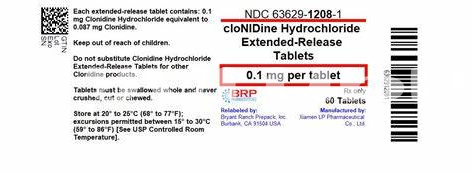
Clinically, clonidine is approved for hypertension and used in some places for withdrawal management; guanfacine’s extended‑release formulation is approved for pediatric ADHD, emphasizing longer daytime symptom control.
Off-label, clonidine features in insomnia, tic disorders, and opioid/nicotine withdrawal protocols, while guanfacine is frequently tried for anxiety, sleep regulation, and adjunctive behaviors — chosen for differential tolerability.
Choice depends on blood-pressure effects, sedation risk, age, and desired duration; clinicians weigh clonidine’s stronger hypotensive action against guanfacine’s better cognitive tolerability in school-aged children and for nighttime symptom control, individualizing treatment plans with monitoring.
Pharmacokinetics: Absorption, Half Life, Dosing Differences
When clinicians weigh onset and absorption, clonidine is well absorbed orally with bioavailability near 70–80% and peak levels reached in about 1–3 hours, while guanfacine demonstrates slower uptake with a more gradual ascent to peak.
Elimination differences are clinically relevant: clonidine’s half‑life in adults is roughly 6–12 hours (prolonged in renal impairment), whereas guanfacine often exhibits a longer half‑life around 17–22 hours, allowing steadier plasma concentrations.
Those kinetic contrasts drive dosing choices — clonidine may need multiple daily doses or an extended‑release formulation to maintain effect and reduce peaks, with careful titration to minimize hypotension and sedation.
By contrast, guanfacine’s sustained profile often supports once‑daily dosing, but clinicians must individualize therapy based on age, renal function, and interacting drugs to optimize safety and adherence. Monitoring blood pressure and educating patients about missed doses remains essential for effective management and adherence.
Side Effect Profiles: Sedation, Hypotension, Rebound Hypertension Risks

Clinicians often observe an early wave of drowsiness when starting these agents; clonidine is particularly notorious for daytime somnolence that usually abates over weeks. Counseling about gradual dose titration and avoiding hazardous activities is essential during initiation.
Blood pressure falls can be abrupt after dose increases, with orthostatic lightheadedness more common in older adults or volume depleted patients. Monitoring supine and standing readings, adjusting antihypertensives, and educating patients about salt and fluid intake mitigate risk.
Abrupt cessation can provoke rebound sympathetic surge with marked hypertension; slow tapering reduces this danger. Combining with other sedatives increases cognitive blunting, so review concomitant meds. Patient plans should include emergency contact and clear instructions for missed doses and monitoring.
Children Versus Adults: Adhd Response and Tolerability Nuances
Clinically, children often show quicker behavioral gains with guanfacine’s targeted prefrontal action, but clonidine can be preferable for severe hyperactivity and sleep problems. Parents report calming effects within days, though daytime sedation and dose-dependent hypotension require careful titration. Developmental pharmacodynamics means lower starting doses and slower escalation compared with adults, and regular blood-pressure checks are essential during initiation.
Adults typically tolerate higher doses with more predictable antihypertensive effects, but older patients face increased orthostatic risk. In adult ADHD, alpha-2 agonists serve as adjuncts when stimulants are inadequate or contraindicated; clinicians should weigh somnolence, rebound hypertension on abrupt cessation, and interactions with antihypertensives and CYP inhibitors when planning therapy and monitoring, and personalize follow-up intervals regularly.
| Age Group | Tolerability Note |
|---|---|
| Children | Greater sedation risk; start low, monitor BP |
| Adults | Higher dose tolerance; watch orthostatic hypotension in elderly |
Practical Prescribing Tips: Switching, Monitoring, Drug Interactions
When switching between agents, plan gradual cross-titration to avoid rebound hypertension or withdrawal. Reduce the dose of the first drug while slowly introducing the second over several days, adjusting based on blood pressure and symptoms.
Monitor supine and standing blood pressure, heart rate, and sedation during dose changes; check for orthostatic symptoms in the first week. Pediatric patients need closer follow-up, and laboratory testing is required unless comorbid conditions exist.
Watch additive hypotension with other antihypertensives and central nervous system depressants; combining with beta-blockers can blunt reflex tachycardia. Guanfacine levels are affected by CYP3A4 inhibitors or inducers; adjust doses accordingly and monitor closely for toxicity.
Counsel patients about sedation, timing doses at bedtime to minimize daytime sleepiness, and carry-over effects after discontinuation. Taper slowly when stopping to prevent rebound hypertension. Communicate changes to all prescribers to avoid harmful combinations thereby.